

Two Chinese AI labs just spent three weeks trying to out-cheap and out-big each other, and the fallout lands directly on your AI bill. Whether you build with these models or just approve the invoices of someone who does, this one is worth ten minutes, because it will either save you money or save you from planning around a promise.
I’ll give you the verdict up front. DeepSeek’s V4-Flash is the release you can act on this week. The weights are published, the license is MIT, and independent testing puts its running cost at about three cents for a full benchmark suite. Alibaba’s Qwen3.8-Max is the bigger headline with the smaller certainty. The hosted model is real and live, but the open weights, and the license that would make them useful, are still promises. Route your cheap, high-volume work toward V4-Flash now. Give Qwen one more week before you plan anything around it.
Every number below comes from either a vendor price sheet or an independent benchmark firm, and I’ll tell you which is which as we go.
The restaurant and the recipe
Before the numbers, you need one mental model, because it makes this entire story click.
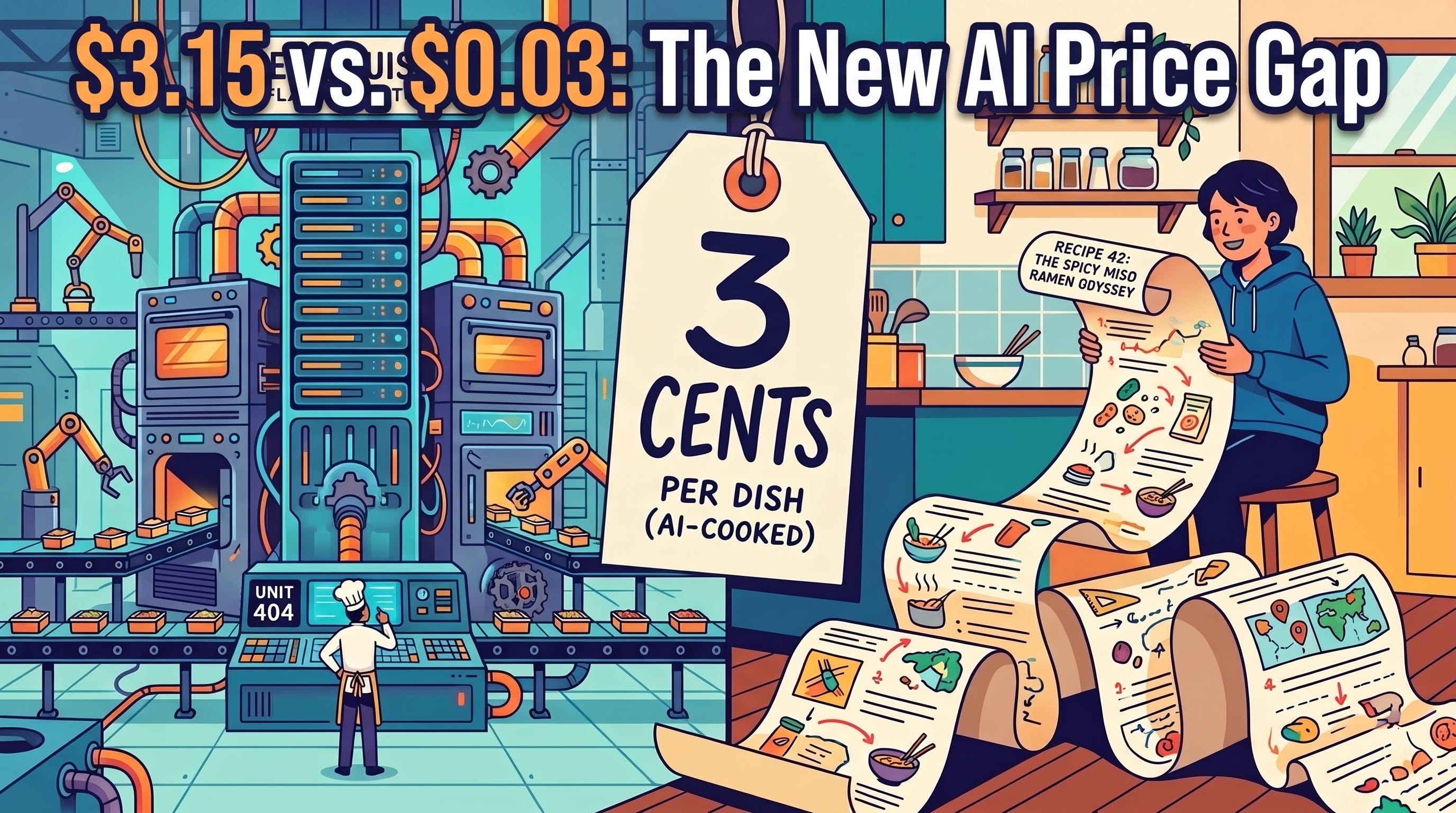
A hosted AI model is a restaurant. You order through the API, they cook everything in their kitchen, and you pay per plate. That per-plate price is the “per million tokens” number on every pricing page.
An open-weight model is the restaurant handing you the recipe. The recipe itself is free, and with a permissive license you can cook at home, change the ingredients, or open a competing restaurant. But you still need a kitchen. And for the biggest models, the kitchen is not your kitchen. It’s a commercial facility with a power bill that reads like a phone number.
Hold onto that, because Alibaba and DeepSeek just made opposite moves in the same war. One slashed menu prices to the floor. The other promised to hand out the recipe for the biggest dish it has ever cooked.
Three weeks of escalation
The sequence, pieced together from multiple outlets, goes like this. In mid-July, Moonshot AI shipped Kimi K3, a 2.8-trillion-parameter model. On July 19, Alibaba rushed a preview of Qwen3.8-Max onto a stage at the World AI Conference in Shanghai without benchmarks or a license. Days later, Moonshot published K3’s full weights, which coverage described as the largest open-weight release to date. On July 31, DeepSeek released V4-Flash and put the weights on Hugging Face the same day. And on August 3, Alibaba fully released Qwen3.8-Max and promised its own weights within a week.
That’s five moves in under three weeks, which is not a product cycle. That’s a bidding war where the bids go down.
DeepSeek’s move: win the check, not the menu
V4-Flash’s menu price, straight from DeepSeek’s own sheet, is $0.14 per million input tokens and $0.28 per million output tokens. Cached input drops to $0.0028 per million, which matters enormously if your app repeats the same system prompt all day.
But the number that made global headlines is different. Artificial Analysis, an independent benchmarking firm, measures what it costs to push a model through its full Intelligence Index test battery. That’s the check, not the menu, because a model with a cheap per-token rate can still run up a real bill if it rambles its way to every answer. V4-Flash came in around three cents per run. Moonshot’s Kimi K3 cost 86 cents on the same measure. OpenAI’s GPT-5.6 Sol cost $1.86. And Anthropic’s Claude Fable 5 cost $3.15.
That last gap is more than one hundred to one. The funny part, flagged in Artificial Analysis’s own write-up, is that V4-Flash is a chatty model. It burns tokens generously and still lands at three cents, because the per-token price is doing all the work.
Now comes the honest caveat, because Ground Truth always has one. V4-Flash scored 50 out of 100 on that same Intelligence Index. That ties Google’s Gemini 3.6 Flash and trails the frontier pack, where Claude Opus 5, Claude Fable 5, and GPT-5.6 all scored at least nine points higher. So the offer on the table is roughly two-thirds of the frontier’s brains at around one percent of the frontier’s running cost. For classification, extraction, summarization, and routing work, that trade is not even close.
Alibaba’s move: the flex with an asterisk
Qwen3.8-Max is the largest model Alibaba has ever shipped: 2.4 trillion total parameters, a one-million-token context window, and multimodal input covering text, images, and video. It’s a sparse mixture-of-experts design, which means only a slice of those parameters fires on each query. Several outlets report that slice at about 95 billion, though Alibaba’s own documentation reportedly doesn’t publish the active count, so treat that figure as reported rather than confirmed.
For scale, a one-million-token context window means you could paste in roughly 750,000 words and the model would still be listening. That’s the entire Lord of the Rings trilogy plus your last four years of meeting notes in one prompt, and I’m honestly not sure which half the model would find more fantastical.
On performance, label your sources. Alibaba’s own benchmark table shows Qwen3.8-Max beating Claude Fable 5 on Terminal-Bench 2.1 while trailing GPT-5.6 Sol’s max setting, and those are vendor-reported numbers. Third-party signal exists too: Arena leaderboard coverage places it as the top Chinese entry among text models and second worldwide on the vision leaderboard. Alibaba also published a case study where the model spent 16 days autonomously building a command-line tool, filing its own GitHub issues along the way, which is either the future of software or the world’s most expensive Tamagotchi, depending on your mood.
The asterisk sits on the open part of “open weights.” They’re promised for next week, and the license hasn’t been published. Alibaba’s past open releases have used Apache 2.0, but as VentureBeat notes, that’s precedent, not commitment, and rival Moonshot recently shipped its open model under a custom license instead. Until the license text exists, Qwen3.8-Max is a hosted product with an announcement attached.
What this actually costs you
DeepSeek V4-Flash. The hosted API is paid: $0.14 per million input tokens and $0.28 per million output, with cache hits billed at $0.0028 per million input. New API users get 5 million free tokens, and the consumer chat app is free with fair-use throttling. One flag before you model costs: DeepSeek has announced that all billing will double during Beijing peak hours, with the effective date still unannounced, so run your projections against the doubled rate if your traffic overlaps China’s workday. The weights are open source under the MIT license, which permits commercial use, modification, and redistribution without restriction. Free software still means your hardware, though. The checkpoint is roughly 167 GB, so self-hosting takes a serious multi-GPU rig that you pay for, not a laptop.
Qwen3.8-Max. The hosted API is paid: $2.00 per million input tokens and $6.00 per million output, with cached input at $0.25 per million. The open weights are promised, not shipped, and no license has been named, so its open-source status is unconfirmed as of this writing. If the weights do land, a 2.4-trillion-parameter checkpoint works out to roughly 1.2 terabytes at 4-bit precision, which makes it a datacenter artifact rather than a home project. The realistic self-host option is the smaller Qwen3.8-27B that Alibaba promised alongside it, and the same rule applies there: until a license exists, don’t build plans on it.
So what
Do this: if you’re paying frontier prices for high-volume, low-stakes calls, pilot V4-Flash this week. A 100x running-cost gap stopped being a procurement detail and became an architecture decision.
Skip this: don’t build product plans on Qwen3.8-Max’s open weights until the license text is public.
Wait on this: Qwen3.8-27B could be the sleeper release for local hardware. Watch for the actual drop, then read the license before celebrating.
One-sentence steal: the per-token rate is the menu, the cost per finished task is the check, and you should always compare checks.
Sources
Artificial Analysis (X): DeepSeek V4 Flash 0731 is now open weights under MIT
Hugging Face: deepseek-ai/DeepSeek-V4-Flash model card (MIT license)
Open Source For You: DeepSeek open sources production V4-Flash under MIT licence
The New Stack: DeepSeek’s smaller model just outperformed its own flagship
BenchLM: DeepSeek API pricing, including announced 2x peak-hour policy
Bloomberg: Alibaba’s Qwen3.8-Max claims benchmark scores rivaling Anthropic
TechNode Global: Alibaba launches Qwen3.8-Max with 2.4T parameters, 1M context
The Decoder: Alibaba’s open-weight Qwen3.8-Max takes on long-horizon tasks
MarkTechPost: Qwen3.8-Max release details, pricing, and benchmark table
VentureBeat: Qwen3.8-Max arrives with bold agentic claims, license still undisclosed